“Coffee Tree planting History” search results (300)

Coffee history France encounters a bottleneck in the development of coffee industry
French King Louis XIV (1638-1715) once tried coffee. Although he was insensitive to the bitter taste, he did not ignore the huge potential business opportunities of coffee. After all, the court alone spent 110000 yuan a year to buy coffee to solve the princess's coffee addiction. Coffee was the most valuable agricultural product at that time, so Louis XIV was eager to share in the global coffee industry. Seventeen ⊙ eight years, France imitates the Netherlands
2015-02-12 Coffee History France Development Industry encounter bottleneck King of France Louis XIV 1
History of introduction and expansion of Coffee in early China (3)
1. Investigation on the year of coffee introduction in Hainan Island in 1898 1.1 the age of the early introduction of coffee in Hainan Island is indisputably expressed as 1908 in many local chronicles, agricultural history, agricultural history and various books and periodicals in China. However, the remains of the century-old coffee trees in Hainan Island are still there, and the descendants of the ancient trees are still there. Therefore, the century-old coffee trees that actually exist in Hainan have unequivocally rewritten Hainan.
2015-04-28 Early China coffee introduction expansion
Dirkley's "Father of Coffee trees in Central and South America"
In the middle of the 18th century, cafes were opened in major cities in Europe, and the huge demand for coffee led to the popularity of growing coffee in Central America. At present, most of the Tibica coffee trees in Central America are related to the coffee mother tree transplanted by Deckley. In 1777, 19 million coffee trees were planted on Martinique Island alone. Haiti, Puerto Rico and Cuba in the Caribbean followed suit to grow coffee.
2015-02-12 Klee Central and South America Coffee Father of Coffee 18th Century Mid-Mid Cafe all over Europe
History of coffee tree cultivation Importance of bean grinder
In fact, Arabs began growing coffee in 525 BC, and chewing roasted coffee beans became popular in Arabia. In 890 AD, Arab merchants sold coffee beans to Yemen, and Yemen made coffee beans into a beverage for the first time. In the 15th century, coffee was introduced into Europe, Asia, and soon into America. By the 18th century, the tropics and subtropics of the globe were widespread.
2016-06-07 coffee cultivation history grinder importance actually 525 BC
The History of Coffee Culture the Development History of Coffee in various countries
The history of coffee: coffee (Coffee) (the word comes from a small town in Ethiopia called kaffa, while in Greek Kaweh means strength and enthusiasm. Tea, coffee and cocoa are called the three major drinks in the world. Coffee tree is a small evergreen tree of Rubiaceae. Daily coffee is made from coffee beans with a variety of cooking utensils, while coffee beans
2014-11-06 Coffee culture coffee history coffee development history
Dirkley-- the Father of Coffee trees in Central and South America
In the middle of the 18th century, cafes were opened in major cities in Europe, and the huge demand for coffee led to the popularity of growing coffee in Central America. At present, most of the Tibica coffee trees in Central America are related to the coffee mother tree transplanted by Deckley. In 1777, 19 million coffee trees were planted on Martinique Island alone. Haiti, Puerto Rico and Cuba in the Caribbean followed suit to grow coffee.
2015-04-02 Klee Central and South America Coffee Father of Coffee 18th Century Mid-Mid Cafe all over Europe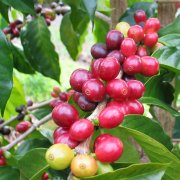
Chinese Coffee the Legend of Coffee in Zhukula Village, Dali, Yunnan Province
When it comes to the history of Chinese coffee, we have to mention Yunnan Dali Zhukula Coffee, which plays a vital role in the history of Chinese coffee. The ancient coffee forest in Zhukula Village is a unique variety of small-grain coffee in Yunnan. It is very rare and of excellent quality. It can be called a living fossil of Chinese coffee. In today's program, we will explore the century-old coffee legend of Zhukula Village. Zhu
2016-06-12 China Coffee Yunnan Dali Zhu Kula Centennial Legend speaking of China
The difference between Hainan coffee beans and Yunnan coffee beans Hainan coffee and Yunnan small coffee beans taste
What are the respective characteristics of coffee beans from these two places? Yunnan small-grain coffee belongs to the Katim species (a variety of Arabica), which is an improved variety of Tibika among the Arabica species, with 25% of the genes of the Robosta species. In the mountainous area with an elevation of 800m to 1800m, the temperature is about 21.5℃ and the annual precipitation is 700~1000mm. It takes 8 to 10 months for the fruit to mature.
2015-10-21 Hainan Yunnan two producing areas coffee beans all have what their own characteristics
A Summary of the Development History of Coffee in Yemen
Coffee scientific name: Coffea arabica), also known as coffee tree, Arabica coffee, etc., is the national flower of Yemen. Before the 6th century in the park, Yemen was called Arab, so the coffee trees transported from them to other places were also called Arabian coffee trees. The name coffee comes from the Arabic Qahwah, which means plant drink. Later, the coffee spread all over the world, and it was picked.
2014-05-27 Coffee history coffee calendar
The Development of Coffee in China the Biography of Coffee in Zhukula Village, Yunnan Province
When it comes to the history of Chinese coffee, we have to mention Yunnan Dali Zhukula Coffee, which plays a vital role in the history of Chinese coffee. The ancient coffee forest in Zhukula Village is a unique variety of small-grain coffee in Yunnan. It is very rare and of excellent quality. It can be called a living fossil of Chinese coffee. We went to explore the century-old coffee legend of Zhukula village. Zhu Kula, located in Yunnan Province
2015-04-28 China coffee development course Yunnan Zhu Kula Zhuan speaking of
A Summary of the Development History of Coffee in Yemen
Coffee scientific name: Coffea arabica), also known as coffee tree, Arabica coffee, etc., is the national flower of Yemen. Before the 6th century in the park, Yemen was called Arab, so the coffee trees transported from them to other places were also called Arabian coffee trees. The name coffee comes from the Arabic Qahwah, which means plant drink. Later, the coffee spread all over the world, and it was picked.
2016-10-15 Yemen Coffee History Overview Scientific name Coffea arab
The History of Coffee which country started drinking coffee
Coffee trees are native to the highlands of southwestern Ethiopia in Africa. It is said that more than a thousand years ago, a shepherd found that the sheep had eaten a kind of plant, became very excited and lively, and then discovered coffee. It is also said that a coffee forest was accidentally destroyed by a wildfire, and the smell of barbecue coffee attracted the attention of surrounding residents. The local aborigines often grind the fruit of the coffee tree and then grind it
2016-06-08 Coffee History that country start drink Tree original produced in Africa
The Brand characteristics of Coffee species and Tree species in Ethiopia introduction to the taste treatment method in manor producing areas
Although Ethiopian coffee beans say that ET is the hometown of coffee, the earliest commercial record of coffee cultivation is in Yemen, Yemen. A. D. 575. HoHo~ calculated in this way, the history of the discovery of ET should also be in the 6th century AD. We have to go back to our lucky Mr. Cuddy again. In other words, after the magical Cuddy discovered the miraculous coffee, he brought it to the same.
2016-10-21 Ethiopia coffee species tree species brand characteristics manor producing area taste
Basic knowledge of Fine Coffee an overview of the history of Yemeni coffee
Coffee scientific name: Coffea arabica), also known as coffee tree, Arabica coffee, etc., is the national flower of Yemen. Before the 6th century in the park, Yemen was called Arab, so the coffee trees transported from them to other places were also called Arabian coffee trees. The name coffee comes from the Arabic Qahwah, which means plant drink. Later, the coffee spread all over the world, and it was picked.
2015-06-17 Boutique Coffee Basics Common sense Yemen Development History Overview Scientific name Co
World boutique Coffee Culture History Colonial Coffee Garden
After the 17th century, the coffee tasted by Europeans is no longer Arabian coffee beans from the east. When cafes quickly became popular in Europe, adventurous businessmen targeted the coffee trade, figuring out the huge profits behind growing and buying and selling coffee. The overseas pioneers of the old colonial empire of the Netherlands, the East India Company and the West India Company, were the first to act, risking being sentenced.
2014-12-08 World boutique coffee cultural history colonization coffee garden 17th century after Europe
A Survey of Chinese Coffee Culture on the introduction of Coffee in Hainan Island in 1898
1.1 the age of the early introduction of coffee in Hainan Island is indisputably expressed as 1908 in many local records, agricultural history, agricultural history and various books and periodicals in China. However, the remains of the century-old coffee trees in Hainan Island are still there, and the descendants of the ancient trees are still there. Therefore, the actual existence of the century-old coffee trees unequivocally rewrote that the earliest introduction of coffee in Hainan Island should be in 1898. 1.2
2015-02-07 China coffee culture about 1898 Hainan Island introduction coffee age
The introduction and expansion of Coffee in China in the early stage of Coffee Development (3)
1. Investigation on the year of coffee introduction in Hainan Island in 1898 1.1 the age of the early introduction of coffee in Hainan Island is indisputably expressed as 1908 in many local chronicles, agricultural history, agricultural history and various books and periodicals in China. However, the remains of the century-old coffee trees in Hainan Island are still there, and the descendants of the ancient trees are still there. Therefore, the century-old coffee trees that actually exist in Hainan have unequivocally rewritten Hainan.
2015-03-09 China coffee development course early stage introduction expansion
The sixth History of European Culture on the Coffee Table Colonial Coffee Garden, a microcosm of cosmopolitanism
After 350 years of drinking a cup of coffee-colonial coffee gardens, a microcosm of cosmopolitanism, the coffee tasted by Europeans after the 17th century is no longer Arabian coffee beans from the East. When cafes quickly became popular in Europe, adventurous businessmen targeted the coffee trade, figuring out the huge profits behind growing and buying and selling coffee. The overseas of the old colonial empire of the Netherlands
2015-01-22 Coffee table Europe cultural history VI colonization coffee garden world doctrine one
The Cultural History of Fine Coffee the spread of Coffee in the World
It has been more than 1500 years since Ethiopian shepherds first discovered coffee. This is more than 1500 years full of hardships, legends and colorful. In 500 years, the shepherd Caldai was the first to discover the wonderful use of coffee. In 525, the first coffee tree was planted in the Arabian Peninsula. In 1475, the first coffee shop was born in Constantinople (present-day Istanbul)
2014-10-15 Coffee culture boutique coffee culture the spread of coffee
The development history of mocha coffee beans
Mocha beans are smaller and rounder than most coffee beans, which makes mocha beans look like peas. In fact, bean-shaped berry coffee beans (Peaberrybean) are sometimes called mocha beans. The shape of mocha coffee beans is similar to that of Ethiopia's Harrar coffee beans.
2016-06-13 Mocha coffee beans development history